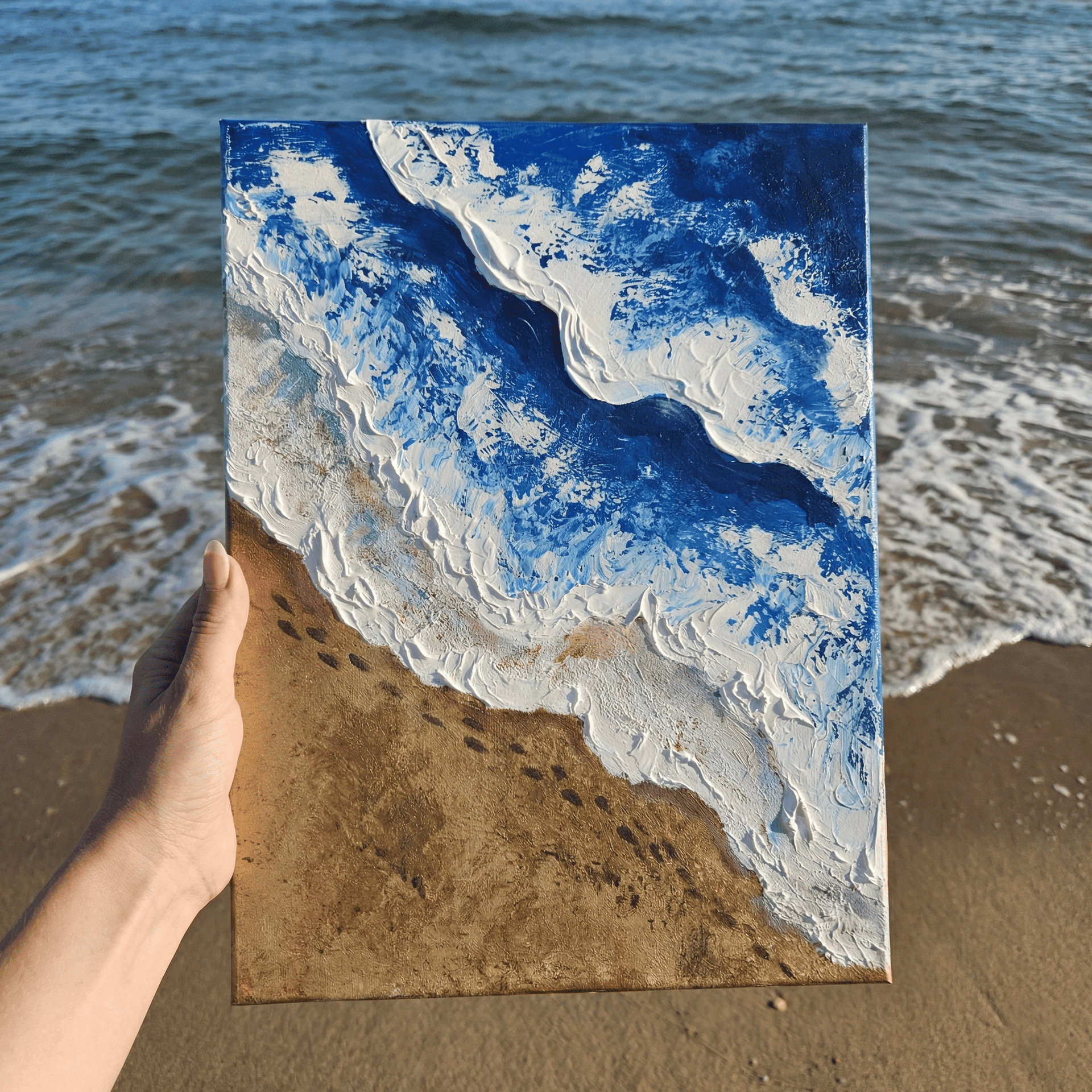
Streaky Backgrounds? No More! How to Achieve the Perfect Color Gradient
You have this picture in your mind: A gentle sunset where warm orange fades seamlessly into a deep violet. You pick up the brush, get started – and five minutes later you have... well, bars. Hard edges. Stripes.
Welcome to the club! The classic color gradient is one of the most common hurdles in acrylic painting, but also one of the most rewarding painting techniques once you get the hang of it. The good news: You don't need years of study for this, just a little courage to be fast.
The Secret: Wet-on-Wet
The mistake most people make: They wait too long. Acrylic paint dries quickly. If you try to paint a new color next to an already dry area, you will always see an edge.
The solution is called Wet-on-Wet. This means we don't mix the colors (only) on the palette, but directly on the canvas while both colors are still moist.
- Be generous: Put a good amount of paint on the brush.
- Work quickly: Apply Color A at the top and Color B at the bottom.
- The magic of the middle: Go with the brush exactly where the two colors meet and wipe back and forth with horizontal movements. Mix them together right there.
Why It Works Better in a Workshop Than at Home
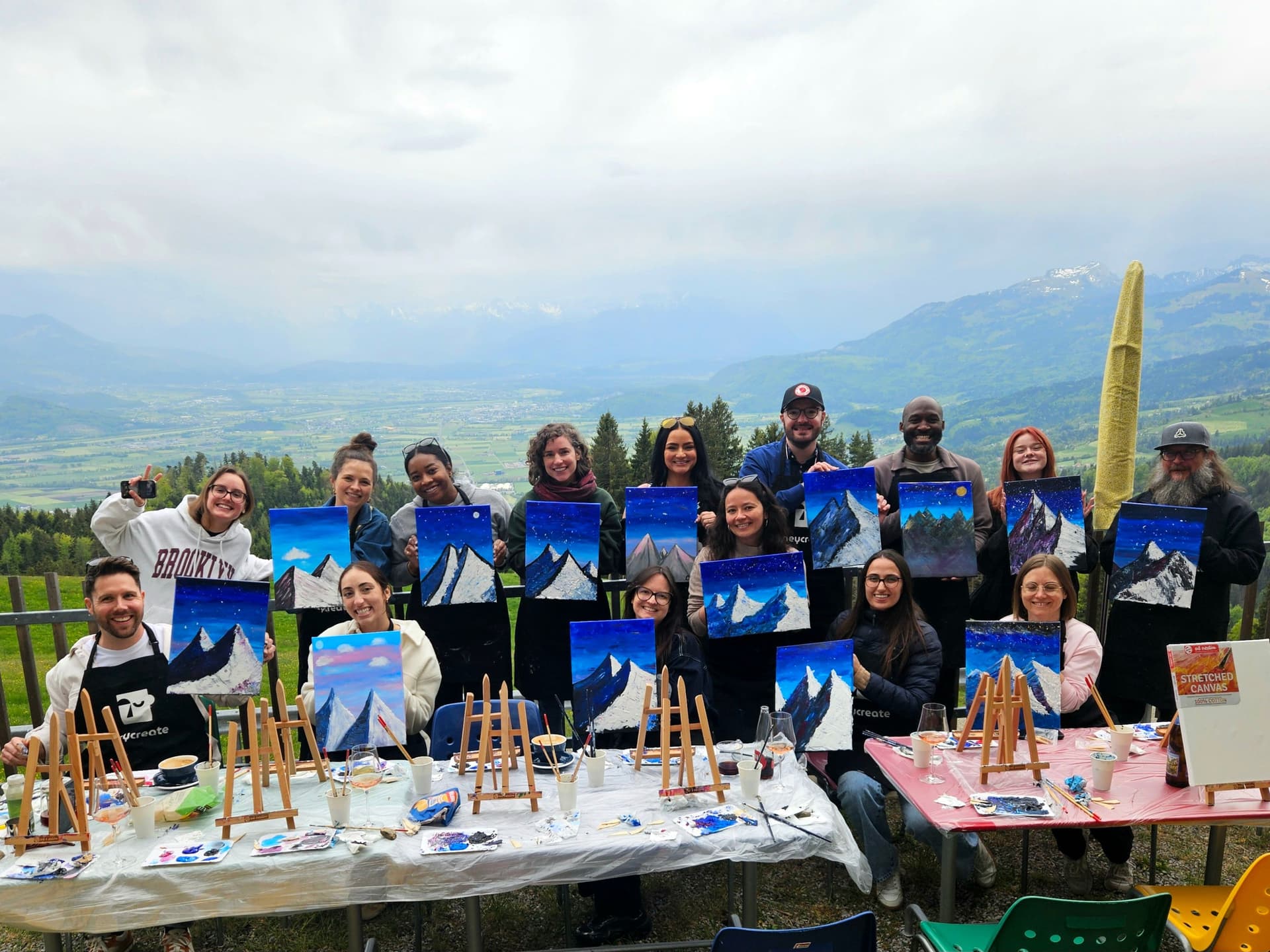
At home, we tend to be too careful. We almost anxiousley "pet" the canvas. At a painting event in Zurich, the mood is different. The music is playing, you might have a glass of wine in your hand, and you are more relaxed.
Exactly this looseness is what a good gradient needs! Firmer pressure on the brush and sweeping movements ensure that the colors flow into each other. And if things do get stuck: Our guides at heycreate will show you exactly how much water or paint you need so that the brush glides almost by itself.
Black to Blue
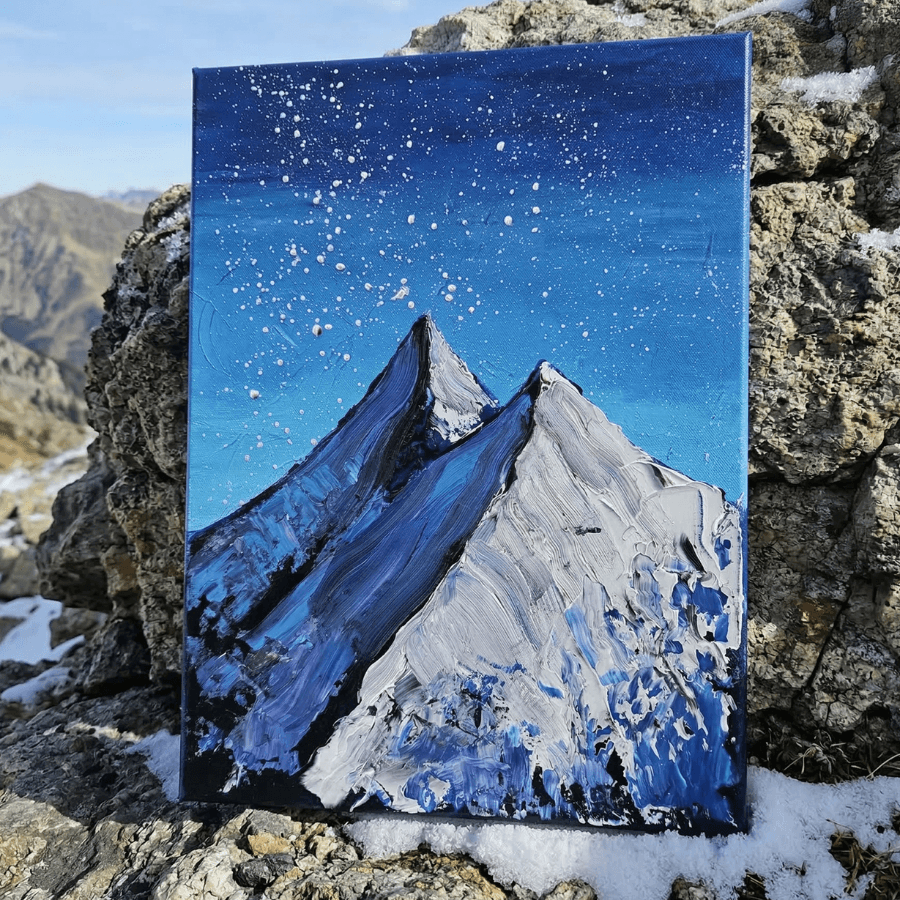
In this painting event, we dive into acrylics and let the colors flow. Using the wet-on-wet technique, you will learn to create dynamic and glowing transitions from the deepest black of the night to a radiant blue—just like in the Peter Fox song.
Practice Makes Perfect (and Fun)
Don't be afraid of mistakes. Acrylic paint is forgiving – if you don't like the transition, we just paint over it. In our workshops, you will learn how to use this technique for backgrounds, water, or dramatic skies.
You will see: Once you have felt the "flow" of blending, you won't want to stop. Come by and try it out!